Formula Electric
Formula SAE is an international competition organized by the Society of Automotive Engineers (SAE). Every year, Texas A&M designs, manufactures, and assembles an electric and an internal combustion formula-style vehicle. I am an engineering lead on the electric team.
2027 Season (AME27)
This season, I aim to bring significant structural upgrades to the vehicle. This includes moving the rear bulkhead forward, reducing the number of members required and providing the aerodynamic subteam additional volume for the read diffuser. Additionally, I am targeting to reduce the height of the tractive system components, allowing for the removal for a large upper firewall which previously restricted airflow to the rear wing. Stay tuned for updates!
2026 Season (AME26)
Over the 2026 season, I brought substantial upgrades to the vehicle. This includes developing an ergonomics jig to optimize the location of the steering wheel, pedals, seat, and other driver interfaces. This ensures they are as comfortable as possible given that a majority of the preformance of the vehicle is determined by the quality of the driver. Additionally, I reduced the mass of the overall frame of the chassis by more than 7% while maintaining an efficiently stiff chassis. Below is the model of the chassis for AME26:
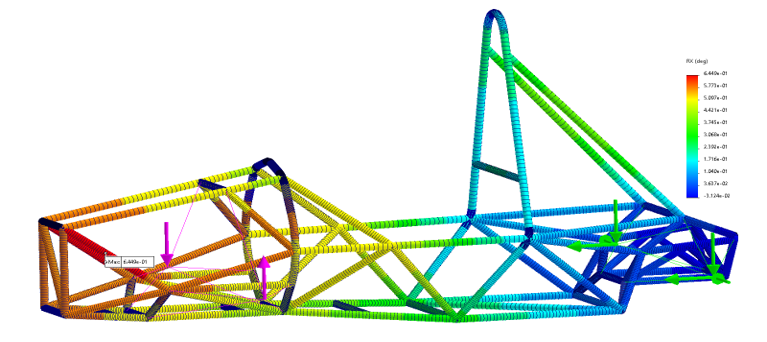
To validate the rigidity of the chassis, torsional load simulations are applied to ensure adequate stiffnes per the needs of the suspension subteam to aquire the proper roll stiffness. These are primarly run in SolidWorks, but also ANSYS. Below are some screenshots of the simulations showing the fixturing, loading, and maximum torsional deflection. Uniquely this simulation utilizes remote loads and fixturing propogating from the wheel centers to the respective chassis fixturing points for a more characteristic model. Additionally, this simulation utilizes beam elements to reduce solve time at the cost of marginal quality relative to solid body finite elements.
I am also responsible for the ergonomics of the vehicle. This season, I have developed a custom seat and firewall combination. This includes custom molded foam inserts with lightweight carbon fiber supports. Furthermore, I utilized my experience with developing the driver model to determine the optimal location of the steering wheel, headrest, pedals, and seat position. All of these measurements were validated with a physical ergonomics rig where the drivers could sit and ensure comfort and adequate clearance. Furthermore, I am responsible for designing and manufacturing suspension and ergonomcis mounting tabs.
2025 Season (AME 25)
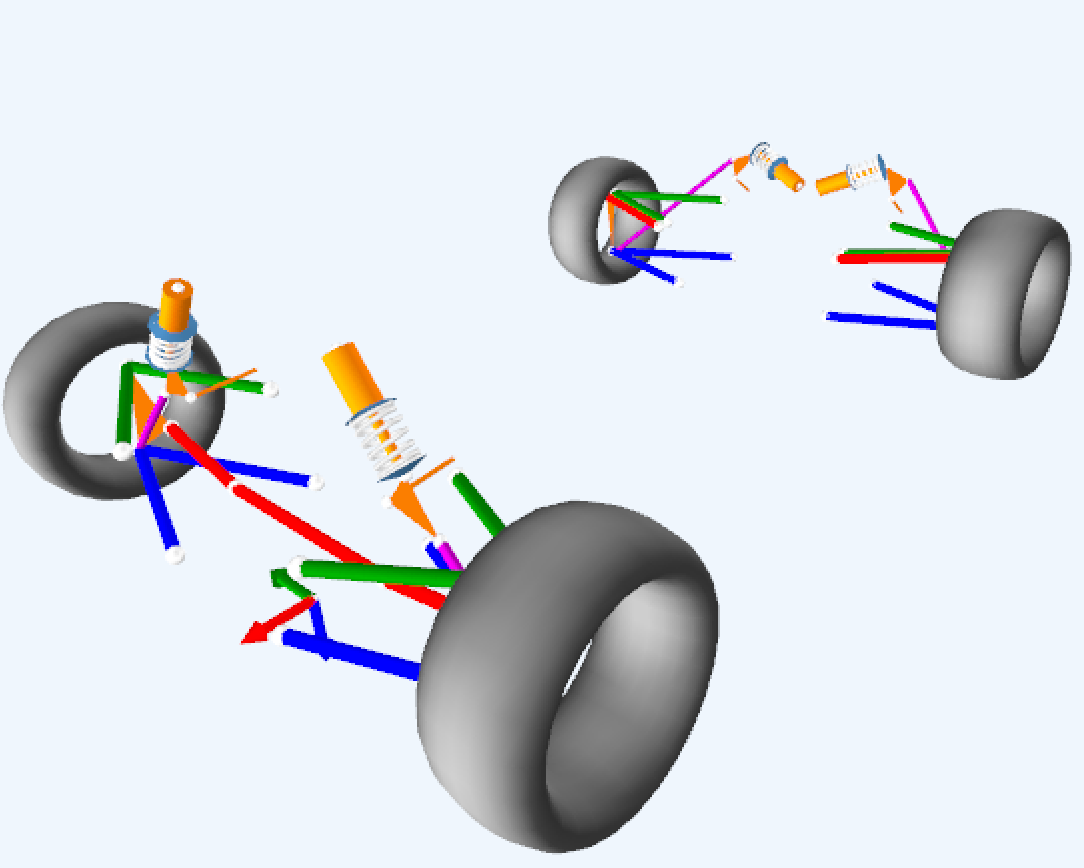
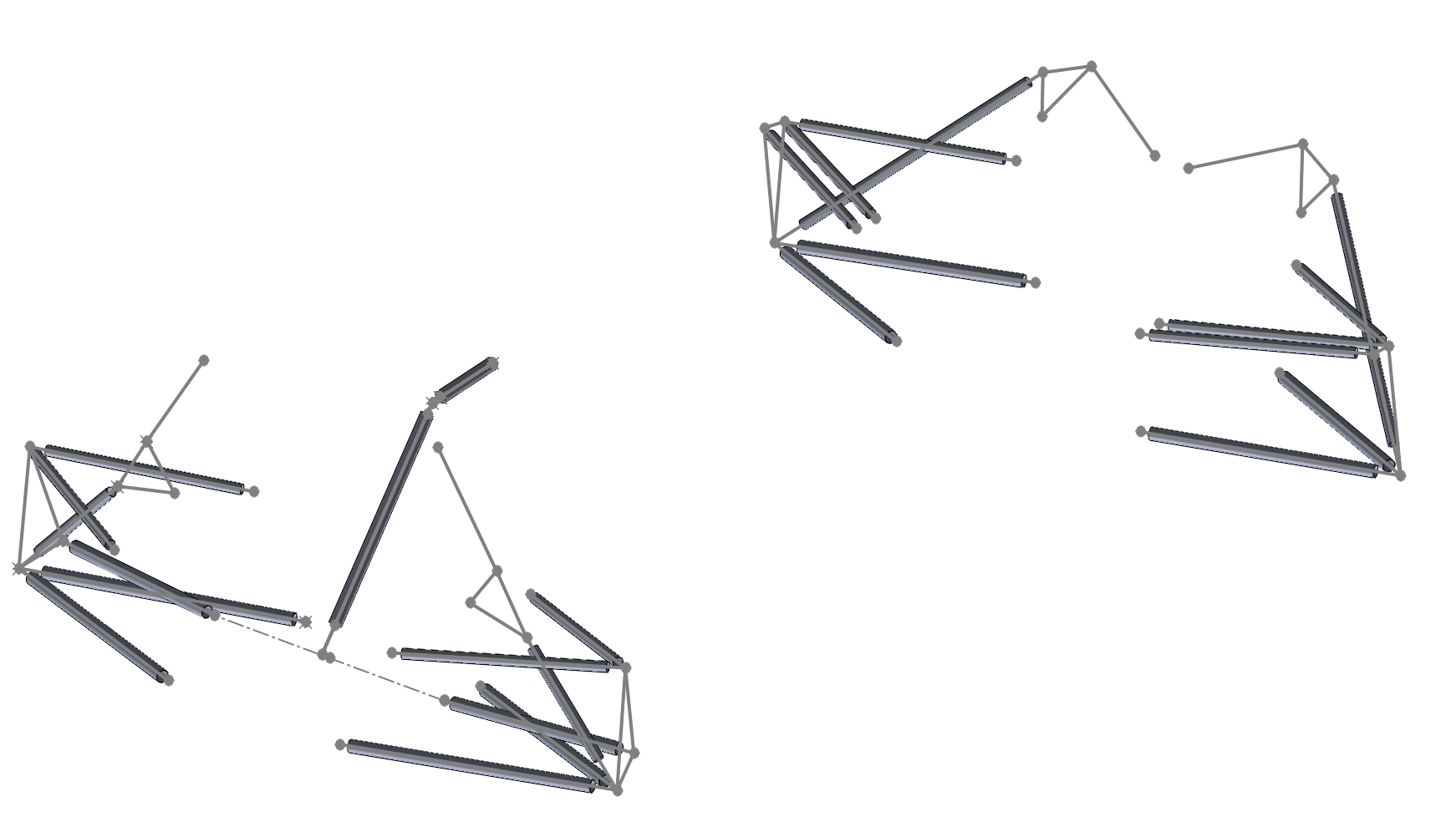
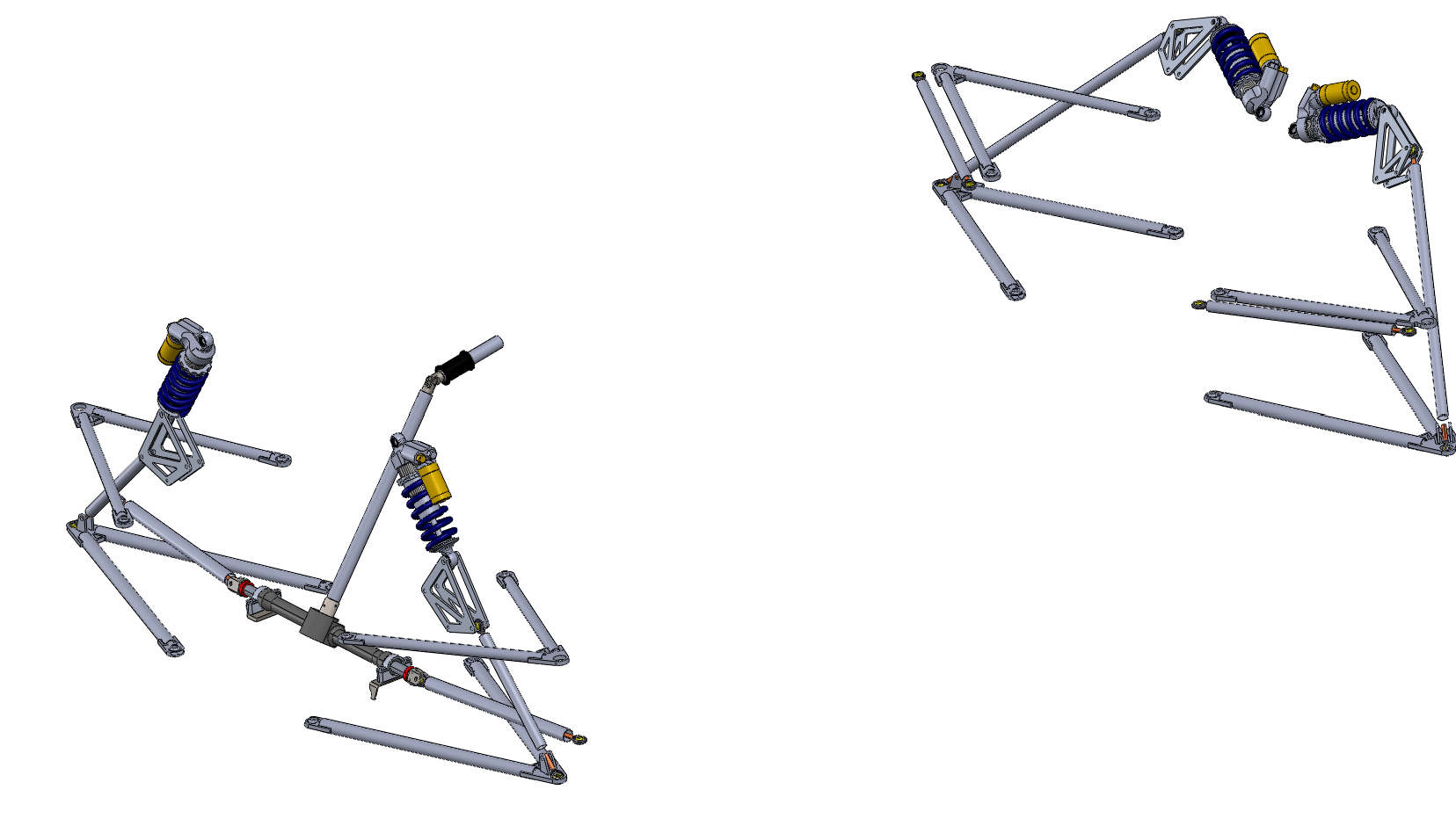
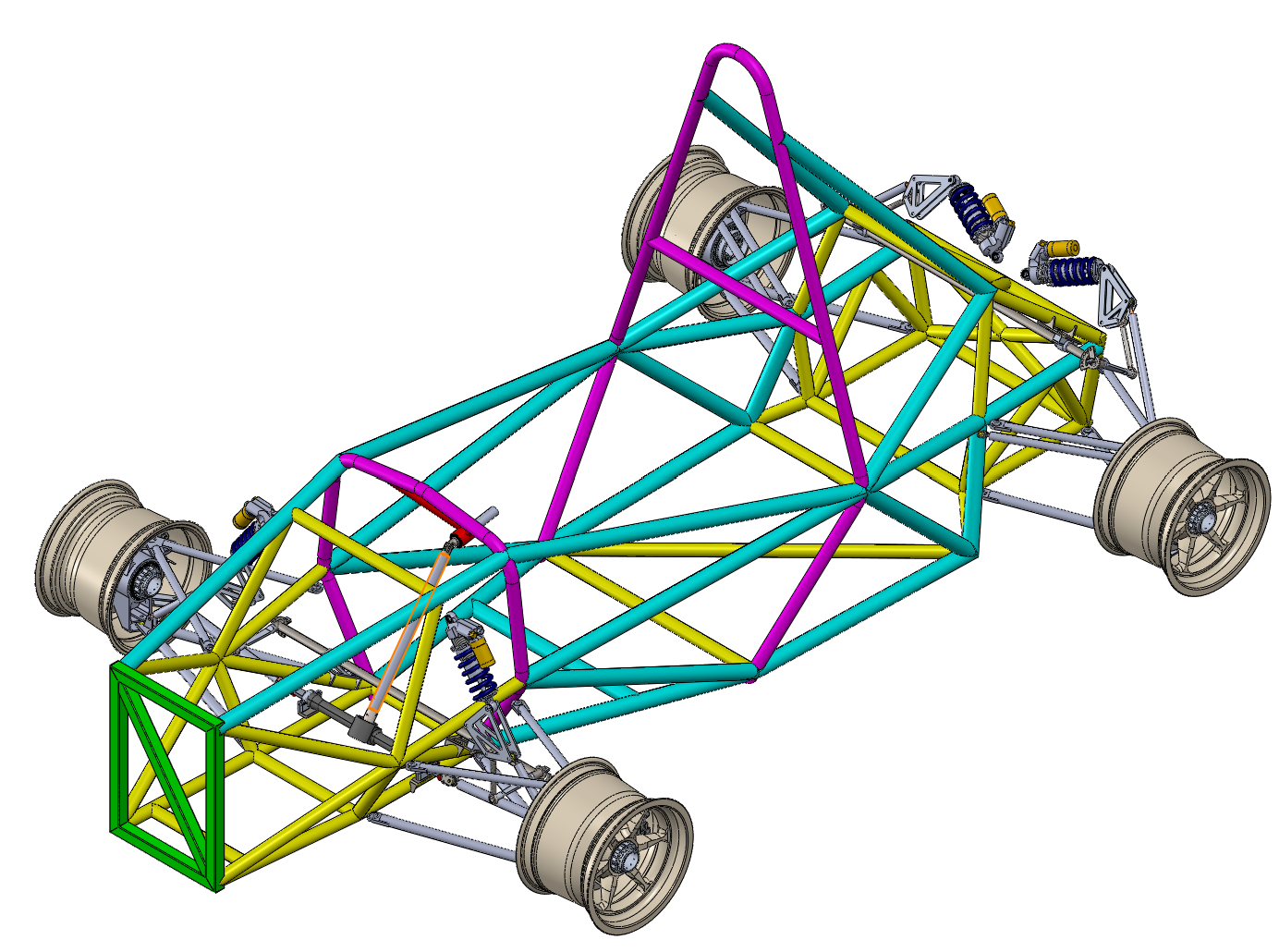
For the 2025 season, I was a key member of the suspension subsystem team with a focus on the steering system. My role also extended to integrating our vehicle dynamic simulation software (Optimum Kinematics) with our vehicle assembly software (Solidworks). My design process revolved around determining the Ackermann ratio, which, simply put, is the ratio between the steering angles of the left and right wheels. The purpose of the ratio is to reduce tire wear while accounting for lateral grip. I established my ratio accounting for the track width and wheel base of the vehicle, as well as other vehicular constraints. I implemented the ratio into the simulation software. Additionally, I adjusted the geometry to mitigate bump steer. This is where small vertical translations in the front wheels result in slight steering angles, which could negatively impact handling characteristics.
The first two pictures show the progression from Optimum Kinematics to SolidWorks via an algorithm I developed. Then, after adding other components, a complete assembly of the control arms was created. Lastly, adding the chassis, wheels, and anti-roll bar assemblies complete the suspension assembly.
2024 Season (AME 24)
For the 2024 season, I was part of the chassis subsystem. I was responsible for the chassis integration with the electronics subsystem as well as the driver model and a couple other smaller projects.
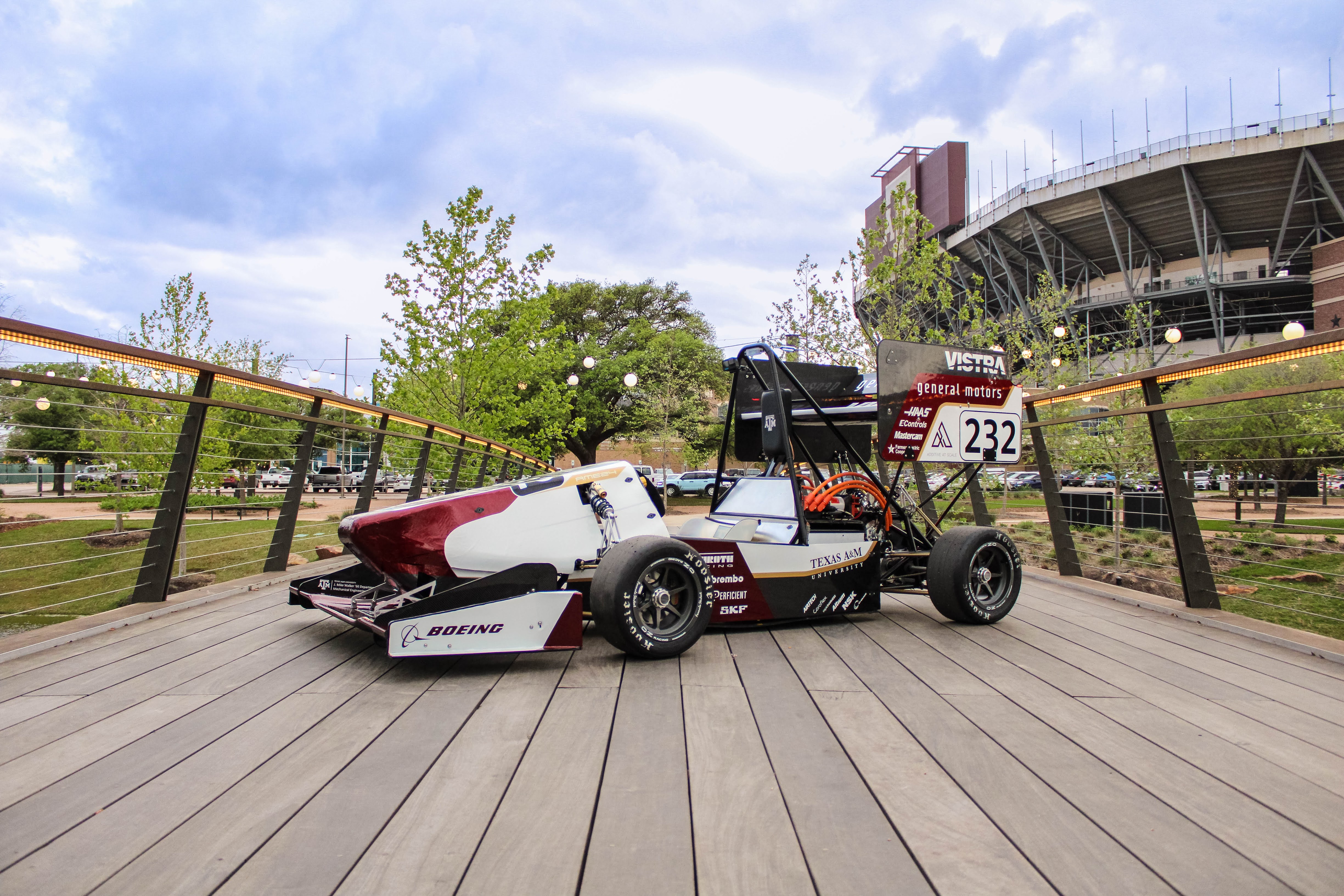
Below is the scale articulable driver model. This file was a 1:1 scale model of our driver and could be moved into multiple positions. This helped establish the position of the steering wheel and seat, ensure rules compliance, and perform aerodynamic simulations.